✍️
Qdrant
About Qdrant
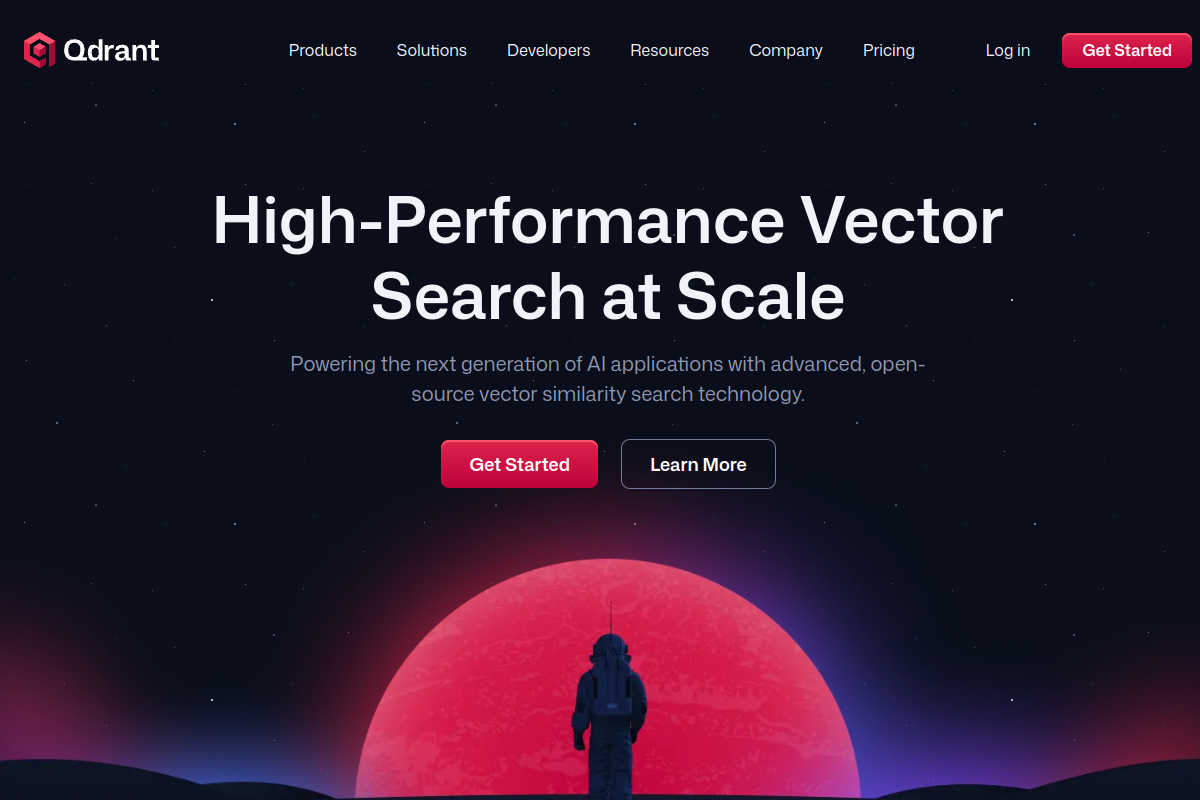
Qdrant est un moteur de recherche vectoriel et une base de données haute performance. Conçu pour des applications d'IA prêtes pour la production avec un filtrage avancé, une prise en charge de charges utiles et des options de déploiement distribué.
Tags
#recherche vectorielle#base de données#haute performance#distribué
0 visits
0 bookmarks
Tarification
Vérifier le site webVisit Trend
Key Metrics
2026-09-01 - 2026-09-30- Monthly visits
- 0
- Avg. visit duration
- 00:00
- Pages per visit
- 0.00
- Bounce rate
- 0.00%
Source Share
Direct visits: 0%Email: 0%Organic search: 0%Paid ads: 0%Referrals: 0%
Traffic Sources
2026-09-01 - 2026-09-30- Direct visits0
- Email0
- Organic search0
- Paid ads0
- Referrals0
Qdrant Core Features
High-Performance Vector Search — Qdrant is built for speed, delivering sub-millisecond query times even at scale, making it ideal for real-time AI applications.
Advanced Filtering — Combine vector similarity search with structured filtering (e.g., metadata, tags) to achieve precise and context-aware results.
Payload Support — Store and retrieve arbitrary JSON payloads alongside vectors, enabling rich data management without external databases.
Distributed Deployment — Scale horizontally with built-in sharding and replication, ensuring high availability and fault tolerance for production workloads.
Multiple APIs — Access via RESTful, gRPC, and Python/TypeScript client libraries, with support for popular frameworks like LangChain and LlamaIndex.
Hybrid Search — Combine dense and sparse vectors (e.g., BM25) for hybrid retrieval, improving relevance in RAG and semantic search systems.
Built-in Dashboard — Monitor cluster health, performance metrics, and collections through an intuitive web-based UI.
Qdrant Subscription Plan
Free
$0
- 1-node cluster
- 1 GB storage
- Community support
- Ideal for development and small projects
Cloud (Usage-Based)
Pay-as-you-go
- Managed service
- Scalable storage and compute
- High availability
- Support included
- Pricing based on usage; check official pricing
Enterprise
Custom
- Self-hosted or dedicated cloud
- Advanced security and compliance
- Priority support
- SLA guarantees
- Custom deployment options